

Every unanswered call is a lost sale. An AI phone agent for business solves the capacity and coverage problem outright: unlimited concurrent calls, any hour, trained on your actual business logic instead of your marketing website. The gap between a working deployment and a failed one is almost always the knowledge layer, not the technology.
Every call that rings out is a client walking to the next name on the list. Answer 75% of 60 weekly inbound calls and close 20% of those, at a $2,500 average deal, and you're leaving roughly $450,000 a year on a phone you already own. An AI phone agent for business closes that gap: it answers every inbound call, first ring, any hour, using your actual pricing and process instead of a scraped version of your homepage.

The hidden cost of missed calls
The visible cost is arithmetic: call volume × missed percentage × close rate × deal value. Run that number once and most owners just go quiet for a minute.
The invisible cost is bigger: the calls you do answer, slowly. Harvard Business Review's lead response research found that the odds of qualifying a lead drop by a factor of 21 when response time goes from 5 minutes to 30. Waiting on a human callback usually puts you on the 30-minute side of that curve by default.
An AI phone agent answers in under 2 rings, every time. Response time stops being "whenever someone gets to it" and becomes a number measured in seconds.

Why voicemail, more staff, and chatbots don't fix it
Three standard fixes exist for missed calls, and each one hits a ceiling.
Voicemail isn't a solution, it's an apology. A caller who wants a service visit doesn't leave a message. They call the next contractor on the list. Voicemail only works if the caller had already decided to hire you, and most inbound callers are still comparing.
Hiring a second receptionist solves coverage, not concurrency. It's still one call at a time per person, so 2 calls at once means one caller waits, regardless of how good that person is.
Basic chatbots handle text, not phone volume. And phone is where the qualified prospects are: people ready to commit pick up the phone, people still browsing send a contact form.
An AI phone agent runs unlimited concurrent calls without added per-unit cost. It doesn't get quiet at 5pm and it doesn't take weekends off.
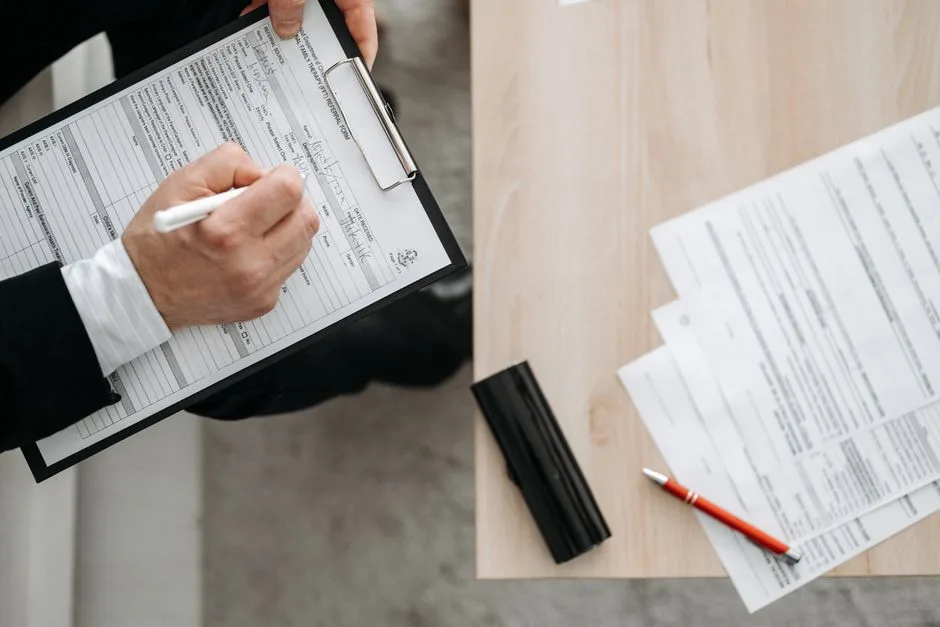
Train it on how the business actually runs
The most common mistake with AI phone systems is pointing them at the website and calling it configured. A website is marketing copy. It doesn't have your real pricing thresholds, your qualification criteria, your actual availability, or the language your best salesperson uses when walking a prospect through scope.
Most AI consulting is tool selection in disguise — a consultant recommends a platform, wires up the integration, and leaves before the knowledge work happens. That pattern is a big part of why 80% of AI initiatives fail to deliver ROI within the first year.
The pattern is consistent at the small business level too. A business owner spends $200 a month on an AI tool, gets responses that sound nothing like them, and cancels after 90 days. Not because the tool was bad. Because nobody told the AI how the business actually works, who its best clients are, or when a call should move from the AI to a person.
We train phone agents on operational reality: real pricing ranges, service delivery steps, qualification criteria, escalation triggers, and the specific handling instructions for edge cases your team already knows how to manage. That's the difference between a smart stranger answering your phone and a trained team member doing it.
This is the knowledge work the AI-Ready Business Blueprint is built to produce, including the knowledge base a phone agent runs on. Voice agent deployment sits on top of that foundation. Details are on our voice agent service page.

What a properly configured deployment delivers
Across our deployments, three numbers hold up consistently.
Inbound resolution
78% Tier-1 auto-resolution (DestiLabs, 2026). Roughly 4 in 5 inbound calls get fully handled by the agent: question answered, appointment booked, information given, no person involved. The rest transfer with a transcript, so whoever picks up is briefed before they say hello.
Administrative hours recovered
About 23 hours a month given back on appointment management alone (AgentZap, 2026), for businesses where staff currently spend 15-25 hours a week on scheduling. For a business where a receptionist or account manager handles scheduling by hand, that's real time back for higher-value work.
AR collection improvement
For the outbound AR collection function specifically: businesses that automate AR follow-up get paid within two weeks 71% of the time, versus 47% with manual chasing (Chaser, 2026 Accounts Receivable Report). The agent works outstanding invoices with a consistent, professional script that doesn't get uncomfortable about asking for money. 64% of small businesses carry invoices 90+ days past due at any given time, and for firms in that position, this function alone often covers the cost of the entire deployment.
These numbers assume a complete knowledge base, calendar integration, and defined escalation logic. Skip the documentation and the agent underperforms on all three. Gartner's research on conversational AI in customer service projects 80% of customer interactions will be handled without a human agent by 2028. The distance between now and that number is knowledge configuration, not model capability.
For the technical side of how this works, the architecture guide covers the ASR, NLU, and TTS layers underneath. If you're weighing this against a simpler after-hours setup first, our piece on automated phone answering is the place to start.

When this is the wrong tool for you
We'd rather tell you when this isn't the right tool than sell you something that won't work.
Skip the AI phone agent if:
- Your inbound volume is under 20 calls a week. The setup cost doesn't recover at that volume.
- You haven't documented pricing, qualification criteria, and escalation rules. The agent will invent answers, and invented answers cost more trust than a slow callback.
- You need something live in 48 hours. A properly configured deployment takes real build time. If you need a stopgap now, a trained after-hours answering service buys you that time.
- You're mid-pivot on pricing or process. Build the knowledge base on a settled foundation, not one that's about to change under you.
If you're not sure where you land, book a call and we'll talk through whether a phone agent fits your situation before you spend anything.
The phone is the highest-intent channel most service businesses have, and for most of them it's also the least consistently staffed one. That's the gap an AI phone agent closes, provided you've given it something worth saying.
Other things on this site that'll save you money.
- →Voice Innovator — the agent this post describes, built for your business specifically.
- →How does an AI voice agent work? — the ASR, NLU, and TTS pipeline underneath the numbers in this post.

Straight answers, marked up for Google.
What is an AI phone agent for business?
An AI phone agent is a configured voice system that answers inbound business calls instantly using natural language processing. It books appointments, answers service questions, qualifies leads, and transfers complex calls to a person with a live transcript. Unlike an IVR menu, it processes natural speech instead of making callers press buttons.
How is training on operational reality different from pointing the agent at a website?
A website is marketing copy: aspirational, vague, and missing the details a real conversation needs. Operational reality means your actual pricing ranges, qualification criteria, service steps, and escalation triggers. An agent trained on a website scrape answers like a brochure. One trained on your operations answers like a team member who's been there a year.
What's the auto-resolution rate for a properly configured agent?
Across 12 live deployments the median agent resolved 78% of Tier-1 inbound queries without a person involved (DestiLabs, 2026): FAQs, pricing questions, appointment booking, and standard enquiries. The remainder transfers to a person with a live transcript. That rate tracks directly with how complete the knowledge base is.
Can the agent handle outbound calls too?
Yes. Outbound AR collection is one of the core functions we configure. The agent dials outstanding accounts, holds a professional, consistent conversation about overdue invoices, and logs the outcome. Businesses that automate AR follow-up get paid within two weeks 71% of the time versus 47% manual (Chaser, 2026 Accounts Receivable Report), mostly because the agent doesn't hesitate or soften the ask.
How long does deployment take?
A properly configured deployment, including knowledge base build, integration, and testing, typically runs 6–8 weeks, matching our standard programme timeline. A 30-day sprint option exists for founders ready to move faster. The knowledge base is the long pole; businesses with already-documented processes move quicker.
Does this replace our reception staff?
No, it removes the coverage gap they can't cover alone. Most deployments keep a person handling complex or high-touch calls while the agent takes first-ring, Tier-1, and after-hours volume. The goal is fewer missed calls, not fewer people.

Still stuck? Book a call.
If you're still weighing whether an AI phone agent is worth building for your business, the honest answer depends on your call volume and how documented your pricing and process already are. Book a call and we'll walk through your numbers before you commit to anything.